Key Features- Learn from curators and conservators from around the world
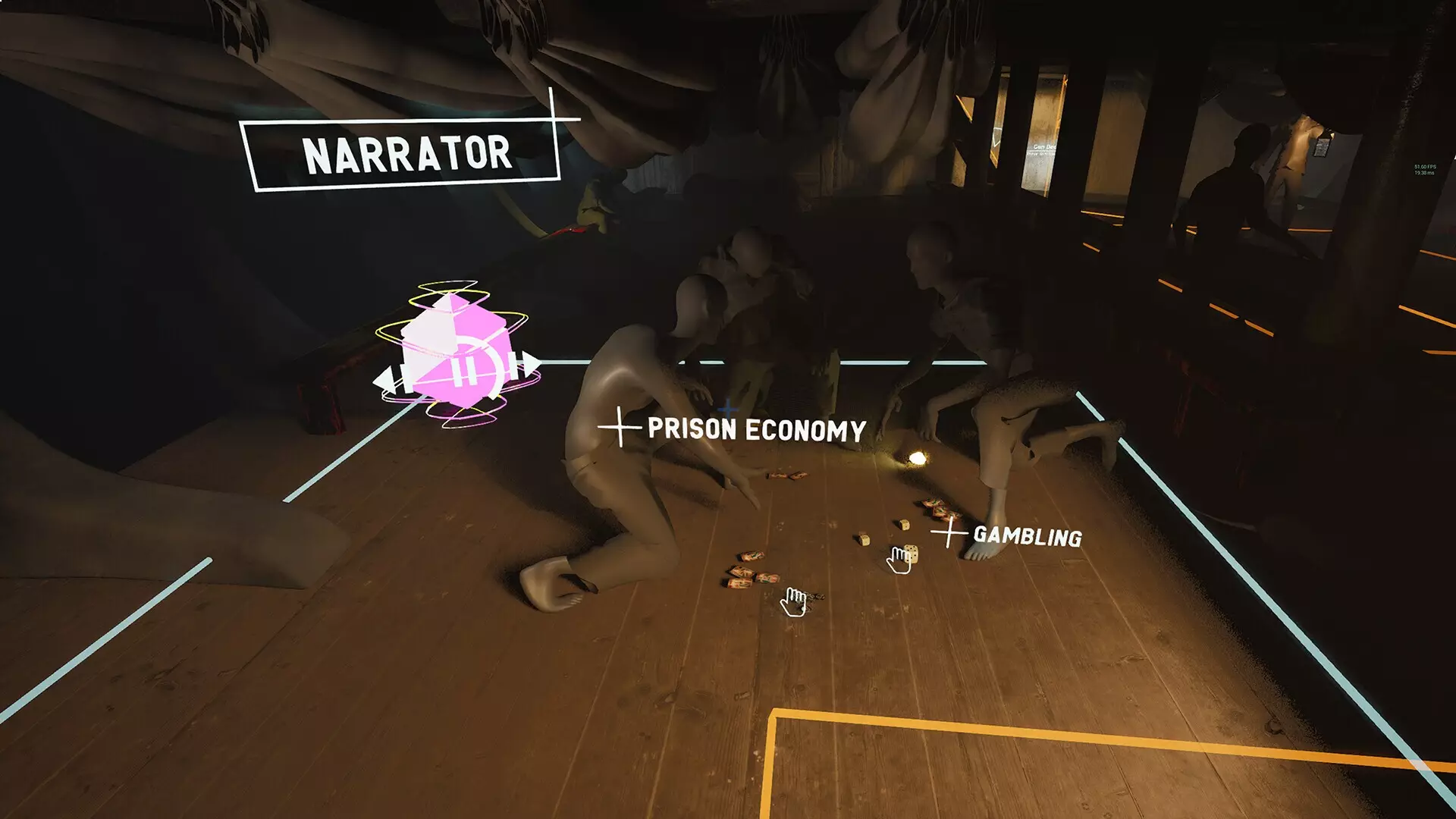
– Experience life aboard a prison hulk during the Napoleonic Wars
– Choose between a guided tour and free roaming on your own
– Experience state-of-the-art VR environments powered by Unreal Engine 5’s Nanite and Lumen technologies.
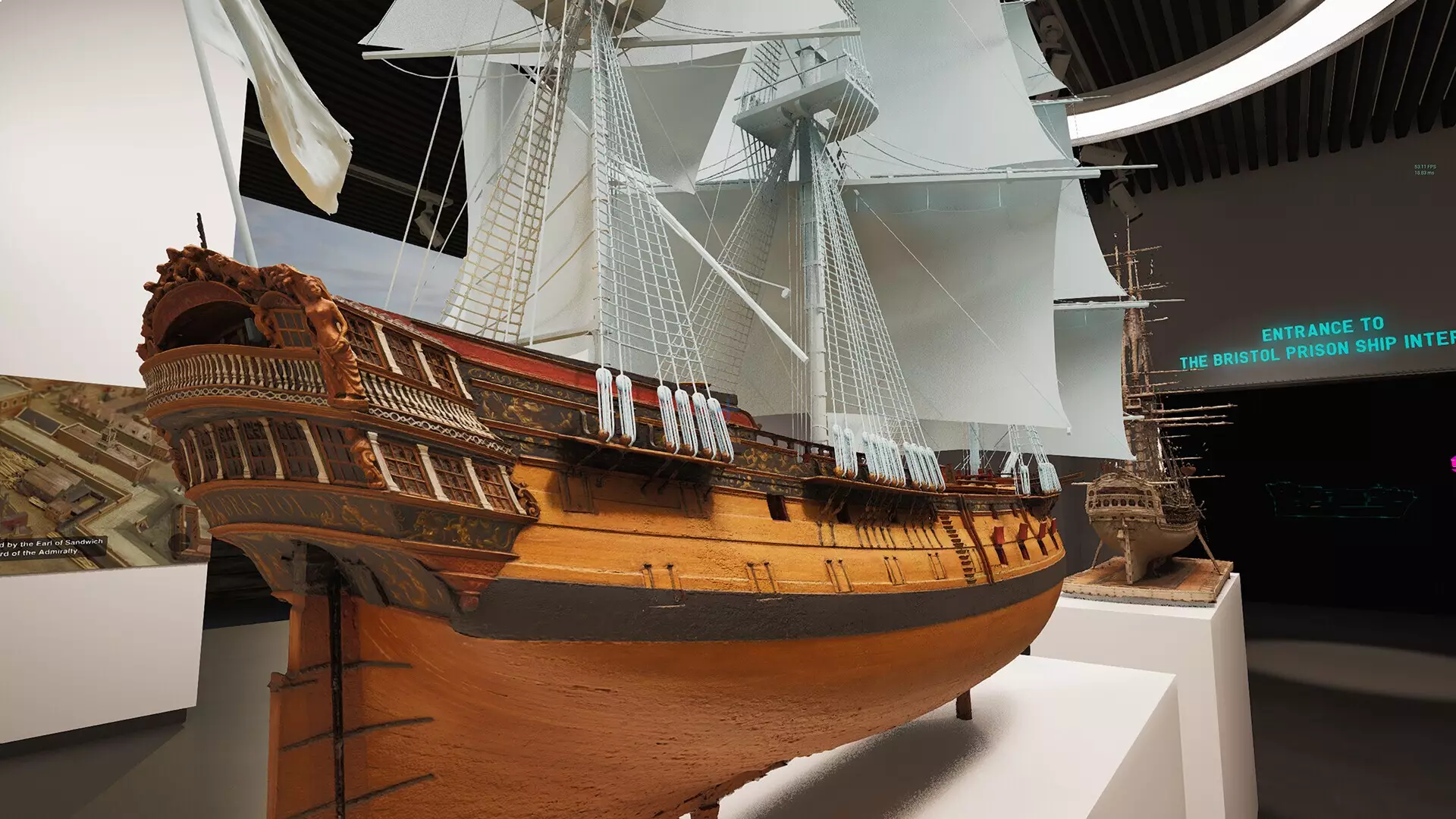
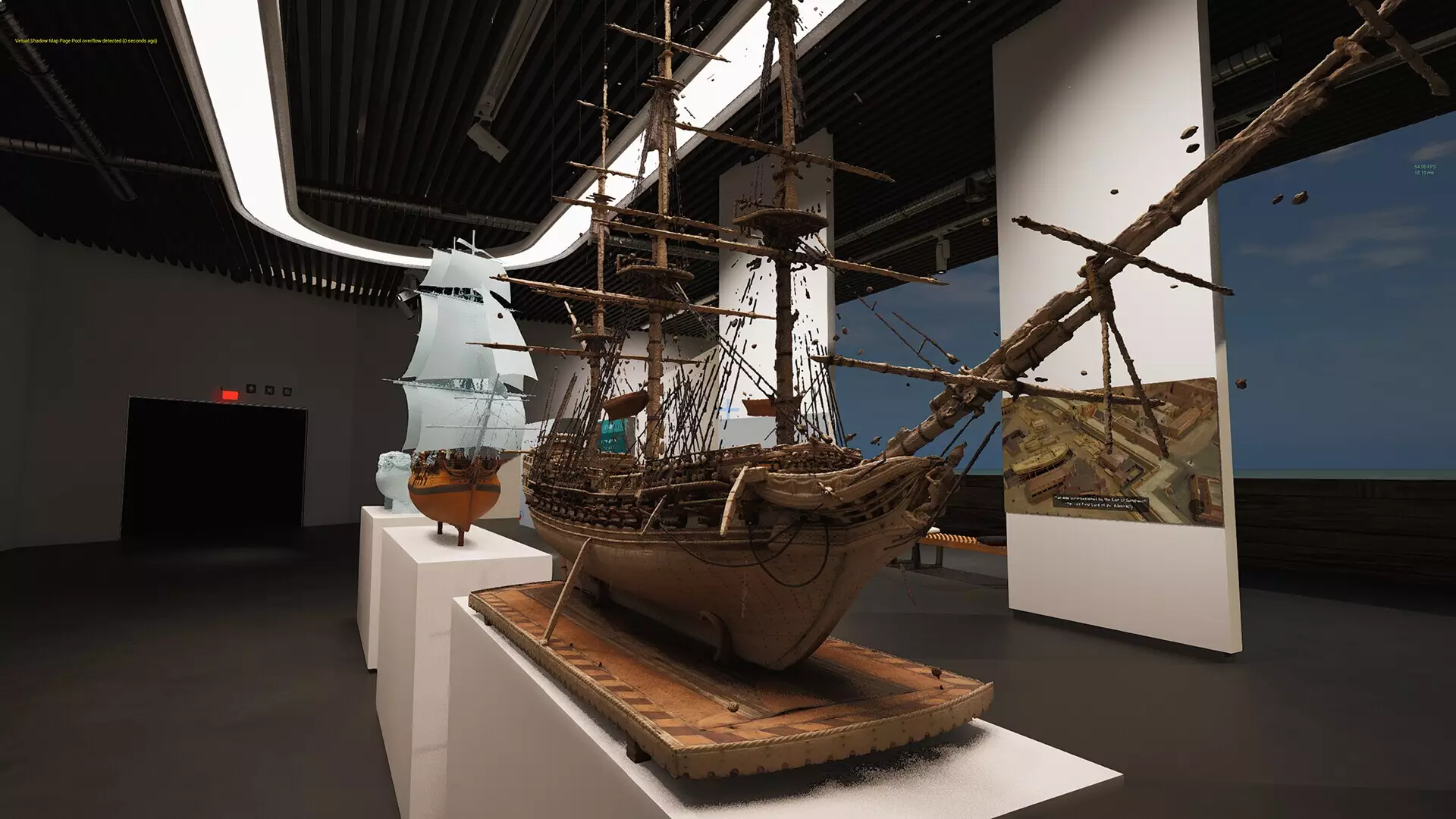
– Explore our models, captured via Computed Tomography and Photogrammetry, rendered in hundreds of millions of polygons with 20k textures.
– Navigate using a VR headset preferably, confirmed users can switch to 2D mode with a mouse and keyboard.
– Best enjoyed in VR on a high-end PC for optimal performance.
– Choose between exploring solo or in a group of up to 6 attendees.
– Free to download on Steam for Windows 10 and beyond
Technology and MuseumsThis VR experience is possible because of the following critical technological aspects:
Scanning Technology
– Photogrammetry is a technology that converts multiple high-resolution photographs into highly detailed 3D models. By capturing images of a subject from various angles and then analyzing them with specialized software, photogrammetry constructs a mesh of polygons that closely mimics the object’s surface. The original textures are then mapped onto this 3D mesh, delivering a digital model that boasts an unparalleled level of detail and realism.
– Computed Tomography (CT) scans offer another avenue for creating detailed 3D models, particularly useful for intricate objects like ship models. Unlike traditional X-rays that provide a 2D view, a CT scan rotates around the object, capturing multiple images from different angles. These images are then processed by software to create cross-sectional slices of the object, which are stacked to form a comprehensive 3D model. The result is an incredibly accurate representation, capturing even the inner complexities that are often missed by other scanning methods.
Unreal Engine 5 Technology
– Nanite is Unreal Engine 5’s virtualized geometry system which uses a new internal mesh format and rendering technology to render pixel scale detail and high object counts. It intelligently does work on only the detail that can be perceived and no more.
It offers multiple orders of magnitude increase in geometry complexity, higher triangle, and object counts than have been possible before in real-time
The Photogrammetry and CT Scan museum assets used in this experience were imported without loss of quality, at the staggering resolutions of 50 to 90 million polygon assets.
– Lumen is Unreal Engine 5’s fully dynamic global illumination and reflections system that is designed for next-generation consoles and the latest PCs. Lumen Global Illumination solves indirect lighting. For example, light bouncing off a surface picks up the color of that surface and reflects the colored light onto other nearby surfaces in large, detailed environments at scales ranging from millimeters to kilometers.
Why & Who?This is a very special project in cooperation between the Art Gallery of Ontario (Toronto, Canada) and Priam Gvord Studio, it is aimed at defining what a historical artifact exhibit would be like in Virtual Reality. It isn’t a product yet, it’s completely free and serves as a first functional multiplayer design model. Compared to many video games and other Steam products the team is very small and comprised of:
– Priam Givord, Project Director & Conceptor – VR Interactive Designer, Priam Givord Studio inc.
– Gillian McIntyre, Project Lead – Interpretive Planner, Art Gallery of Ontario
– Adam Harris Levine – Associate Curator, European Art, Art Gallery of Ontario
– Sherry Phillips – Conservator, contemporary art and ship models (retired) research and content development
– Matthew Scott – Media Producer, Art Gallery of Ontario
– Simon Stephens – Curator of Ship Model and Boat Collections, National Maritime Museum, Greenwich, London.
– Catherine Thomson – Manager, Digital Projects, Art Gallery of Ontario
– Sean Guadron – Lead Developer at letscreatesomethingamazing
– Pyramid Attack & Tyler Dillman – 3D Design
– Karen Vanderborght – Interface Design, KRAK Fractured Media
– Candice Dan, Art Collision – Project submission & Synopsis
About the GameAGO BRISTOL 1775 is an advanced VR immersive application aiming to establish a high-quality standard in the field of Museum Virtual Reality exhibitions. This groundbreaking project was produced by the Art Gallery of Ontario (Toronto, Canada) in collaboration with Priam Givord Studio to explore the potential of virtual reality to exhibit and interpret historical artifacts. This free application will serve as the first-in-the-world multiplayer VR museum visit system with a live guide from the AGO (up to 6 visitors from anywhere around the world).
The focus point: an original ship model of the Bristol, a warship and later a hulk that held prisoners from the Napoleonic Wars (1793-1815). The model belongs to the Thomson Collection of Ship Models, on exhibit at the Art Gallery Of Ontario, unique in Canada and one of the finest ship model collections in the world. This interactive storytelling experience will allow visitors and online viewers to immerse themselves in life aboard the prison hulk and discover details usually hidden within the object on display.
剧情导向第一人称模拟独立游戏教育探索线性3D写实多人模式冒险氛围感合作模式在线合作开放世界历史虚拟现实仅支持VR六自由度动态叙事旁白战争海军船队单人模式

※ 游戏本体及图像的版权均归原制作方所有